OpenAI Hires OpenClaw Creator to Power Next-Gen Personal AI Agents
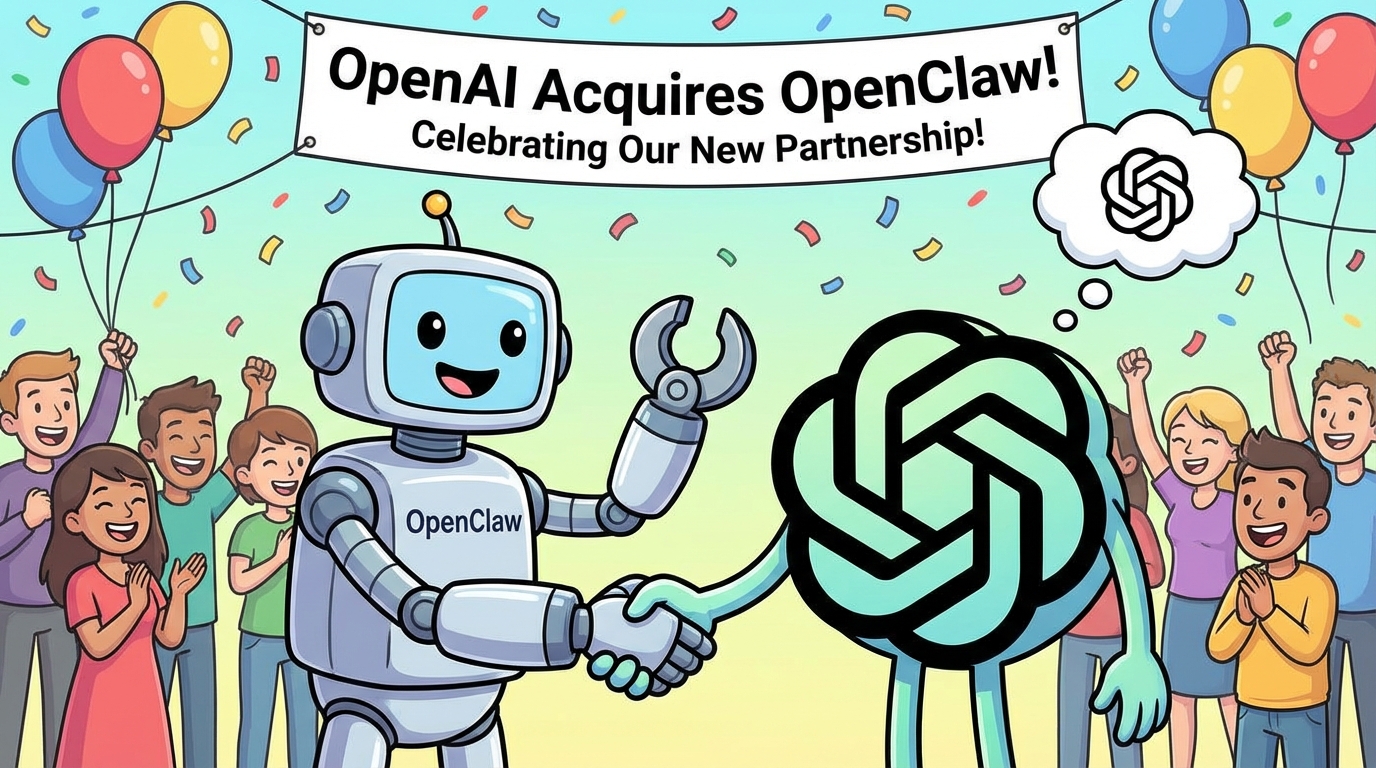
In a move signaling growing corporate interest in autonomous AI agents, OpenAI CEO Sam Altman announced this Sunday (02/15) that Peter Steinberger, creator of the viral AI agent OpenClaw, is joining the company to “drive the next generation of personal agents.”
The Announcement
Altman made the announcement in a post on X (formerly Twitter), describing Steinberger as “a genius with a lot of amazing ideas about the future of very smart agents interacting with each other to do very useful things for people.”
“We expect this will quickly become core to our product offerings,” Altman wrote. “The future is going to be extremely multi-agent and it’s important to us to support open source as part of that.”
What Happens to OpenClaw?
According to the announcement, OpenClaw will be transformed into a foundation — an independent open-source project that OpenAI will continue to support. Steinberger confirmed in his own post that the project will remain “open, independent, and just getting started.”
Previously known as Clawdbot and later Moltbot, OpenClaw gained viral popularity over the past few weeks with its promise to be “the AI that actually does things” — from managing calendars and booking flights to even joining social networks composed exclusively of other AI assistants.
Peter Steinberger’s Words
In an extensive post on his personal site, Steinberger explained his decision. He acknowledged that OpenClaw could have become a huge company, but said that didn’t excite him.
“What I want is to change the world, not build a large company, and teaming up with OpenAI is the fastest way to bring this to everyone,” Steinberger wrote.
He also shared his long-term vision:
“My next mission is to build an agent that even my mum can use. That’ll need a much broader change, a lot more thought on how to do it safely, and access to the very latest models and research.”
Steinberger, who previously founded PSPDFKit (a PDF processing company) and spent 13 years on it before coming out of retirement to launch OpenClaw in late 2025, described himself as “a builder at heart.”
Context and Implications
The acquisition comes at a time of intense competition in the generative AI market. OpenAI, recently valued at $500 billion, faces strong competition from companies like Google and Anthropic — whose Claude model has been gaining traction with features like Claude Code.
OpenClaw has spread rapidly even in China, where it can be configured to work with Chinese language models like DeepSeek. Search engine Baidu announced plans to give users of its main smartphone app direct access to OpenClaw.
Concerns and Scenarios
Some researchers have expressed concerns about OpenClaw’s openness and the potential cyber threats that could arise from users’ ability to tweak it in just about any way they see fit. However, the decision to make the project an open-source foundation suggests a commitment to transparency and community collaboration.
For OpenAI, bringing Steinberger on board represents a strategic move to consolidate its position in the emerging market of AI agents — systems that not only answer questions but execute autonomous actions on behalf of users.
What This Means for the Future
With Steinberger at OpenAI and OpenClaw becoming a foundation, we can expect:
- Deeper integration between AI agents and OpenAI products like ChatGPT
- Growth of the open-source ecosystem around OpenClaw
- More focus on safety as autonomous agents become more ubiquitous
- Standardization of protocols for communication between multiple AI agents
The move also suggests that the future of AI may be much more distributed and collaborative than initially imagined — a scenario where multiple specialized agents work together, like people on a human team.